
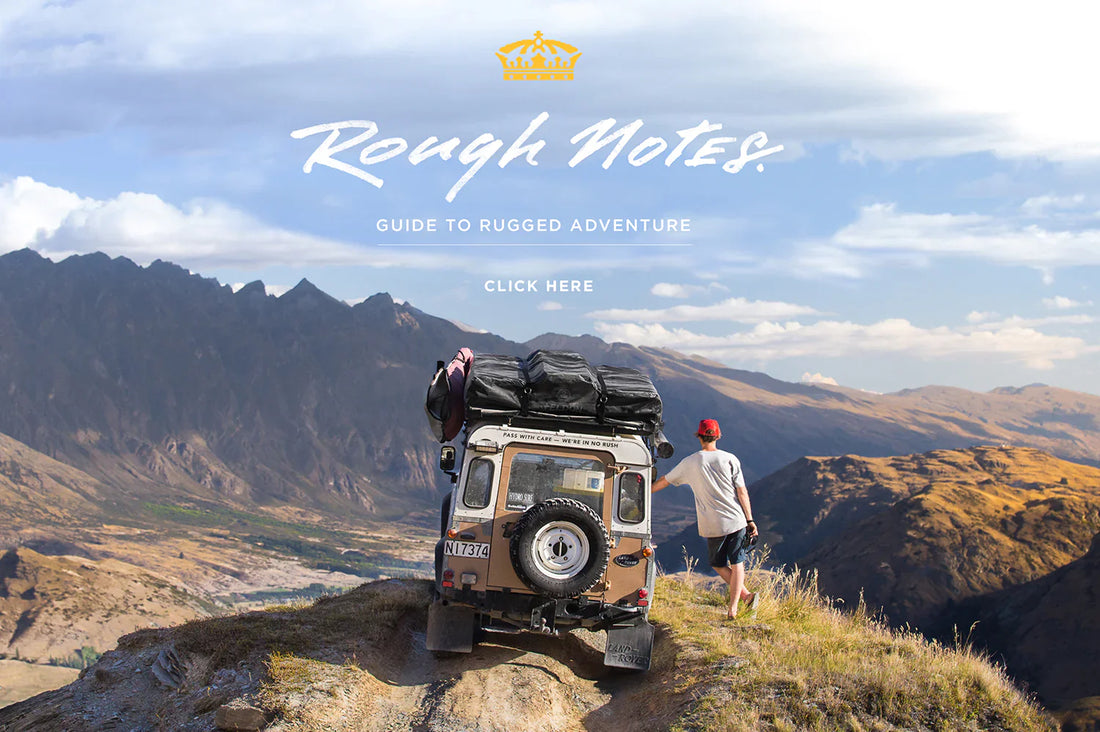

CORONA ROUGH NOTES: GUIDE TO RUGGED ADVENTURE
A guide for adventure
Oftentimes, getting off the beaten path and getting stuck in mud right to your door is the path to treasure. We've been stuck in mud, sand, and rivers plenty of times. As with many things, preparation is key to being ready for whatever terrain you encounter on your next adventure. Learn from past mistakes and follow these simple tips to prepare yourself to discover beautiful yet remote places.

- Vehicle Preparation: The theme here is preventative maintenance. No one wants to be stranded in the middle of nowhere, and knowing your vehicle will get you where you want to go makes the journey that much more enjoyable. All adventure vehicles have a few things in common that should be done before you hit the road.
-
Visual Inspection : Check under the hood and under the car for visible leaks, signs of overheating, and signs of wear. Look for coolant or oil leaks, and check for cracks or wear on drive belts (fan/power steering/air conditioning) and water hoses. Finally, have a friend operate the car's lights while you walk around the car to make sure everything is working properly. Replace any bulbs that don't work.
-
Fluids : Don't "it'll work out" or "it'll be fine." If you're going on a long trip, make sure your engine oil and oil filter are fresh. Then check your coolant, transmission fluid, differential oil, and brake/power steering/clutch fluid to make sure they're all full and in their proper places. Even if you're going on a short trip, make sure all your fluids are in their proper places before you set off.
-
Tires/Brakes : These come in handy sometimes, don't they? Make sure your tires are well above the tread depth indicator and are properly inflated. Check your brake pads and rotors to make sure they have enough life left, too.
-
Finally, check your spare tire : Make sure your spare tire is fully inflated and that you have a jack and other tire-changing accessories in the trunk.
Now you can relax! Your vehicle is ready for a long drive. Whatever happens from here, be proud of your hard work and preparation. If all this seems a bit daunting, call a friend or take it to your local garage.

- What to Pack It's important that everything is in its place and organized, at least until the chaos of the trip begins. Rummaging through a cluttered trunk is no one's favorite pastime. Storage boxes are a great investment. There are four staples we always bring: cooking utensils, food, tools, and other camping gear. Knowing where everything is at all times helps the trip go smoothly and ensures that you don't forget anything small when a last-minute trip comes up.
Here are some things to pack in your car to save you headaches on your journey:
– Extra oil and a good sized bottle of water.
Tools: A screwdriver, socket set and good pliers will get you far. Also, make sure you have enough tools to change a tire.
- An air pressure gauge and an air pump (either a foot pump or one powered by your car battery). We'll explain why you need these later.
– A tow rope, a good jack and a shovel. This is going to be an interesting journey.

Must-Have: Road Trip Essentials
While you're sitting at your desk dreaming up your dream road trip and imagining the laughs and fun you'll have with your friends, it's important to pack your luggage with some key items to make the long drive go smoothly.
-
Music is essential : Once we cross the hills south of us, the radio signal disappears. From there, most of the country roads are filled with radio static. Whether you're a planned or spontaneous traveler, plan music for your soul. Spotify and Apple Music playlists are great. We've bought CDs from second-hand shops in our small town, but we quickly grew tired of them.
-
Friends : Bring some good friends along. Solo travel is cool, but it's much more fun to share the driving duties with good company and enjoy some surfing and coffee. There's always going to be a friend who backs out at the last minute. Remind them of the surf and the sights to change their mind!
-
Snacks and drinks : These are essential to keep your crew healthy and happy. Phone chargers are also essential. While phones can be a nuisance on a road trip, they're essential in emergencies and are useful for contacting family and friends.
-
A good camera : Bring a camera to take memorable photos. No matter how good your memory is, it will eventually fade. Get a camera to keep the memories of your trip forever.
-
Old-Fashioned Maps : While your smartphone's built-in map is essential, nothing beats a traditional paper map. Available for purchase at your local store, they make a great companion for any journey. Jot down notes, record useful information, warnings, good coffee spots, and more. When planning future trips, it's great to have a trusty paper map to refer to previous locations.

4. How to choose a location for your tent
If you have the time, it's worth exploring to find the perfect spot, making sure you have plenty of daylight and checking the tides if you're planning on waking up by the water.
Once you think you've found the perfect spot, first make sure it has solid, level ground to avoid a headache when you lay down for the night. Also, check that there is shelter from the wind. A good grove of trees or a solid cliff will help block the wind at night and maintain a quiet environment. No wake-up spot is perfect without a great view, but sometimes compromises are necessary. Waking up on a sand dune or overlooking a river is worth a night of wind and noise.
5. Setting up a rooftop tent
We might be a little biased, but rooftop living is seriously amazing. Leave the pegs, air mattress, and poles at home. No poles are needed for basic setup, and the Crow's Nest tent goes up in less time than it takes to boil water. With a built-in queen-size mattress, you'll never have to inflate a bed again. Sleeping bags and pillows also fit inside the tent (and stay there while traveling), freeing up space for more friends, surfboards, and gear.
Setup is super easy: simply unzip the zipper, remove the travel cover, and roll it up. Release the Velcro side straps, pull the ladder, and the tent will automatically deploy, ready to go. Effortless setup makes for carefree adventures. If you plan on staying longer than one night, simply climb the ladder and add the spring poles for even more shelter and protection.

6. Outdoor cooking
Cooking in the kitchen is great, but cooking outdoors is a whole different ball game. Finding prep space in the bush can be difficult, and even trickier on the sand. Our one key piece of advice is to keep it simple with basic setup.
A good dual-burner gas stove, a cast iron skillet, good quality plates, bowls, cups and cookware and you're set. And don't forget the kettle.
You don't need to pack a ton of food. Part of the fun of a long trip is gathering ingredients along the way, stopping at local food stands, and filling your cooler with as much locally grown produce as possible. But don't forget to pack a few essentials before you set off. Oil, salt, pepper, and a few herbs take up little space and will improve the flavor of your meals on the road.
When cooking, try to use as few utensils as possible and think about cleanup. Reuse pots and pans, share bowls, and don't be afraid to eat straight from the skillet. The less mess you make, the easier it will be to clean up.

How to reach remote areas
If you want to avoid the crowds, you'll have to get off the beaten path and navigate some pretty tricky terrain. Even if you ultimately fail, the journey across the river or down the beach is always worth it. The soft sand and rough terrain can be tough on your gear, but these simple tips will help you get to the other side:
Tire pressure
This is where that tire pressure gauge you packed earlier comes in handy. Deflating your tires increases the tire's contact patch, increasing the contact area with sand, mud, or riverbeds for better traction. Depending on the size and weight of your vehicle, it's essential to lower the pressure to 20-15 psi before plunging into soft sand or loose ground.
Harnessing Momentum
When the ground gets soft, momentum is your friend. Switch to a lower ratio (if available) and choose a low gear. Keep your speed slow and steady. Ease off the accelerator early, especially if you encounter soft ground and are forced to stop. The worst thing you can do in this situation is to accelerate harder and bury yourself further. It's a good idea to have another car with you, and always take the time to walk the route and look for hazards.
Check the tide
Before hitting the beach, check the tides. You'll be surprised how quickly the tide can come in, especially if there's a swell. To avoid danger, ride on firm sand and keep your foot gentle and steady. Driving on sand puts a lot of strain on your right foot, and keep an eye on your engine temperature gauge.
Beach Driving
Think beach riding is only for trucks with big mud tires? Wrong! Wide street tires love the sand and can sometimes get you to places you never thought possible without digging in like mud tires. Remember tire pressure and momentum! These two factors will keep the locals from pulling up next to you and yelling, "Hey, your diff's filling up!"
Post-trip care
After successfully completing your off-roading journey, drive slowly and carefully when returning to a gas station to re-inflate your tyres (alternatively, it's best to use an electric or foot pump to inflate your tyres before hitting the road). Don't forget to wash your vehicle as soon as possible too - sand is a real problem for cars and will get into hard-to-reach places, so a proper undercarriage wash is essential.

8. I'm stuck!
No matter how careful you are, you'll eventually get stuck on your adventure, laugh (or cry), and then start thinking about how to get out.
Don't worry! Everyone gets stuck, and getting out is part of the fun. First, stay calm and try to determine why you're stuck. Check which wheels are spinning, and whether the differential or part of the chassis is embedded in the ground. If you followed our advice and have a friend with you, get them to pull you out with a strong tow rope or snatch strap while standing on solid ground. If not...
Try to retrace your steps. The logical thing to do is to use the tracks you dug yourself. If possible, drive slowly back and forth to firm up the ground and gain the momentum you need. If all else fails, start digging with a shovel or your hands. Decide which direction you want to go and dig in that direction, removing the ground from under the differential, axles, and chassis. Only your tires should be touching the ground. From here, ask a friend to create a path for you to gain traction, ideally with recovery tracks (like Maxtrax), but also with branches, sticks, dried seaweed, rocks, or whatever you can find. Once you have regained traction and momentum, maintain it. Get out of the soft ground and find another path.
If everything goes wrong, don't sweat it - just try again, and try harder this time, because no great road trip story is complete without burying your car in the ground.

So we maintained our car, loaded it up with well-thought-out gear, gathered a great crew, traveled across the country, camped in amazing places, enjoyed uncrowded waves, ridden beaches and rivers, got stuck and got back out again - it was an amazing journey for us!
A huge thank you to Corona NZ for being a part of this journey and helping put this guide together. Enjoy!